
Additionally, this article is part of the Suara TEEAM 93rd Issue magazine, covering cable termination.

In the electrical industry, attention is often focused on major assets such as transformers, switchgear, protection systems and power cables.
These are undoubtedly critical components.
However, the most costly failures in electrical work can be traced to something smaller and less visible—the cable termination.
Whether in a commercial building or an industrial plant, every electrical circuit relies on the integrity of its connections. However, this truth applies across renewable energy facilities and utility substations.
A cable lug may appear to be a simple component. However, it serves as the final interface between the conductor and the equipment it powers. Every ampere of current flowing through a system must pass through this connection point.
If the termination is poorly designed, manufactured from inferior materials or incorrectly installed, the consequences can include overheating, voltage drop, equipment damage, unplanned outages and, in severe cases, fire.
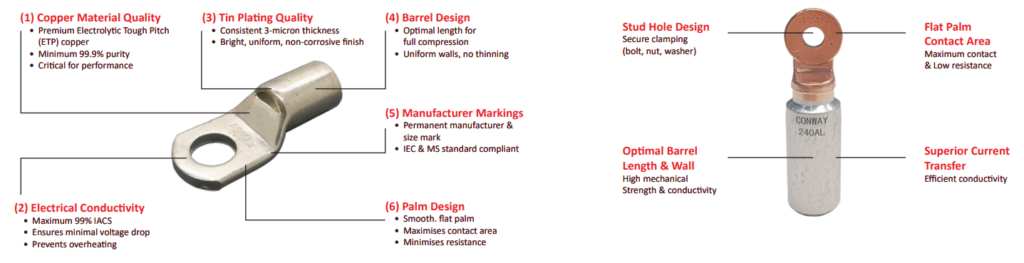
Recognizing the importance of cable terminations, Malaysia introduced MS 1540:2015, a standard developed to establish requirements for the material, marking and dimensions of compression cable lugs used with copper conductors.
For applications involving aluminum conductors terminated onto copper equipment, Malaysia also established MS 2584:2014, which specifies requirements for bi-metal compression connectors and lugs.
While these Malaysian Standards define the product requirements, materials, dimensions and marking requirements, both standards rely on IEC 61238-1 as the recognized international performance testing standard.
IEC 61238-1 evaluates the electrical and mechanical performance of connectors through rigorous testing such as temperature rise, current cycling, short-circuit withstand and mechanical pull-out tests.
Together, MS 1540:2015, MS 2584:2014 and IEC 61238-1 form an important framework. Moreover, it ensures the safety, reliability and long-term performance of the cable termination systems used throughout Malaysia’s electrical infrastructure.
The development of these standards reflects a simple reality: not all cable lugs are created equal. To the untrained eye, many products available in the market appear almost identical. However, the characteristics
that determine long-term performance are often hidden beneath the surface.
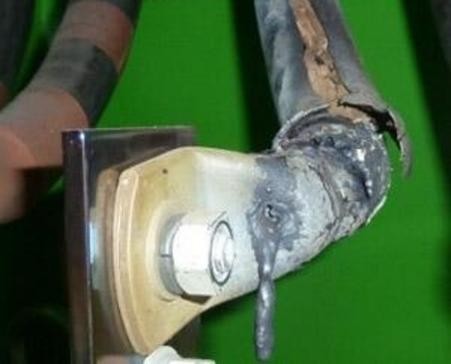
Factors such as material purity, electrical conductivity, barrel dimensions, wall thickness, palm design, plating quality and manufacturing consistency can vary significantly from one product to another.
These differences may not be immediately visible during installation, but they can have a substantial impact on the reliability of a connection over many years of service.
Material
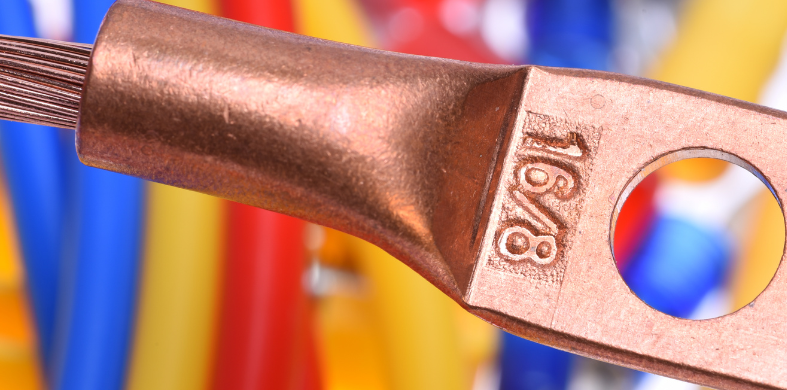
A cable lug is sometimes viewed as little more than a piece of metal formed into a tube with a mounting hole. In reality, it is a carefully engineered electrical connector.
For copper compression lugs, MS 1540 specifies the use of Electrolytic Tough Pitch (ETP) copper with a minimum purity of 99.9% and electrical conductivity of at least 99% IACS. These requirements exist for good reason.
Electrical conductivity directly affects resistance at the connection point. Higher resistance generates additional heat, and excessive heat remains one of the leading causes of termination failures in electrical systems.
By specifying high-purity copper and minimum conductivity requirements, the standard helps ensure efficient current transfer and long-term performance.
The same engineering principles apply to bi-metal lugs.
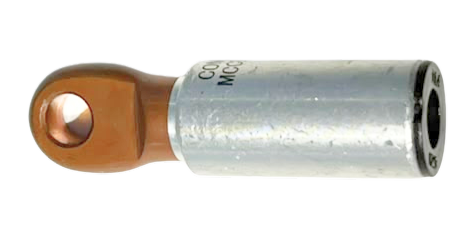
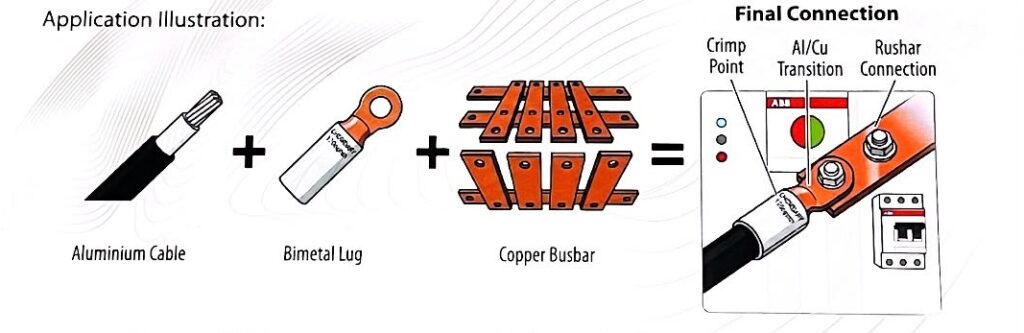
Although their construction differs, typically consisting of an aluminum barrel permanently joined to a copper palm, their function remains the same: to provide a low-resistance, mechanically secure and durable electrical connection.
The transition between aluminum and copper is particularly critical because these dissimilar metals behave differently when exposed to electrical loading and environmental conditions.
A properly manufactured bi-metal lug must therefore maintain both electrical continuity and mechanical integrity throughout its operational life.
In Malaysia, bi-metal compression connectors are covered under MS 2584:2014.
This standard establishes requirements for materials, dimensions, marking and construction of bi-metal lugs used to connect aluminum conductors to copper equipment.
Similar to copper lugs covered under MS 1540:2015, bi-metal connectors must demonstrate reliable performance under electrical and mechanical stress.
To verify this performance, both Malaysian Standards utilise IEC 61238-1 as the recognized testing methodology.
One aspect of cable lug design that often receives insufficient attention is barrel geometry. Experienced
installers understand that a successful termination depends not only on the quality of the crimping tool, but also on the design of the lug itself.
Adequate barrel length ensures full conductor engagement, while sufficient wall thickness allows uniform compression during crimping.
Barrel Length, Proper Dimension
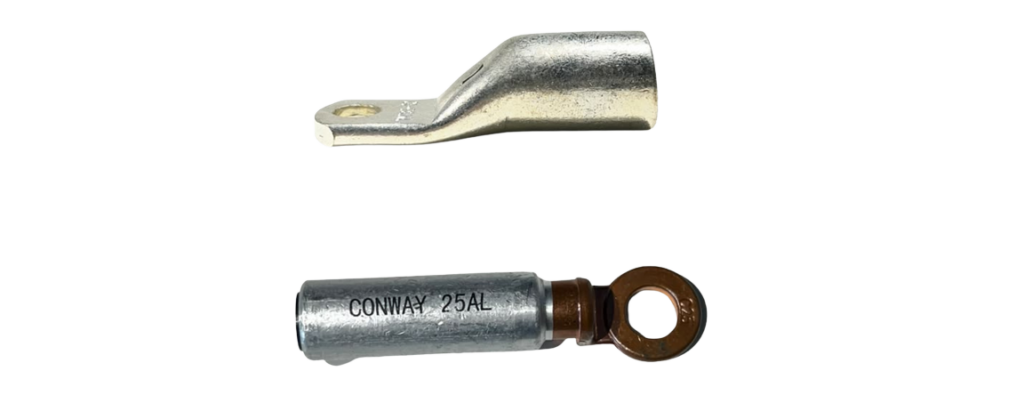
Proper internal dimensions help achieve optimal contact between the conductor and connector, reducing resistance and improving mechanical retention.
In recent years, global cost pressures and increasing competition have encouraged manufacturers worldwide
to optimize material usage.
As a result, products available in the market today may differ significantly in barrel length, wall thickness, palm dimensions and overall mass.
While material optimization is not inherently undesirable, engineers and purchasers should ensure that any design changes continue to satisfy recognized standards and performance testing requirements.
This is where MS 2584:2014 and IEC 61238-1 become especially important. While MS 2584:2014 establishes
the requirements for bi-metal connectors, IEC 61238-1 provides the performance testing methodology used
to verify connector reliability under actual operating conditions.
Products are subjected to temperature rise testing, current cycling, short-circuit withstand testing and mechanical pull-out testing to verify their ability to perform reliably under electrical and mechanical stress.
These requirements provide confidence that the connector is capable of maintaining a stable connection throughout years of service, even in demanding environments.
Tin-plating Quality
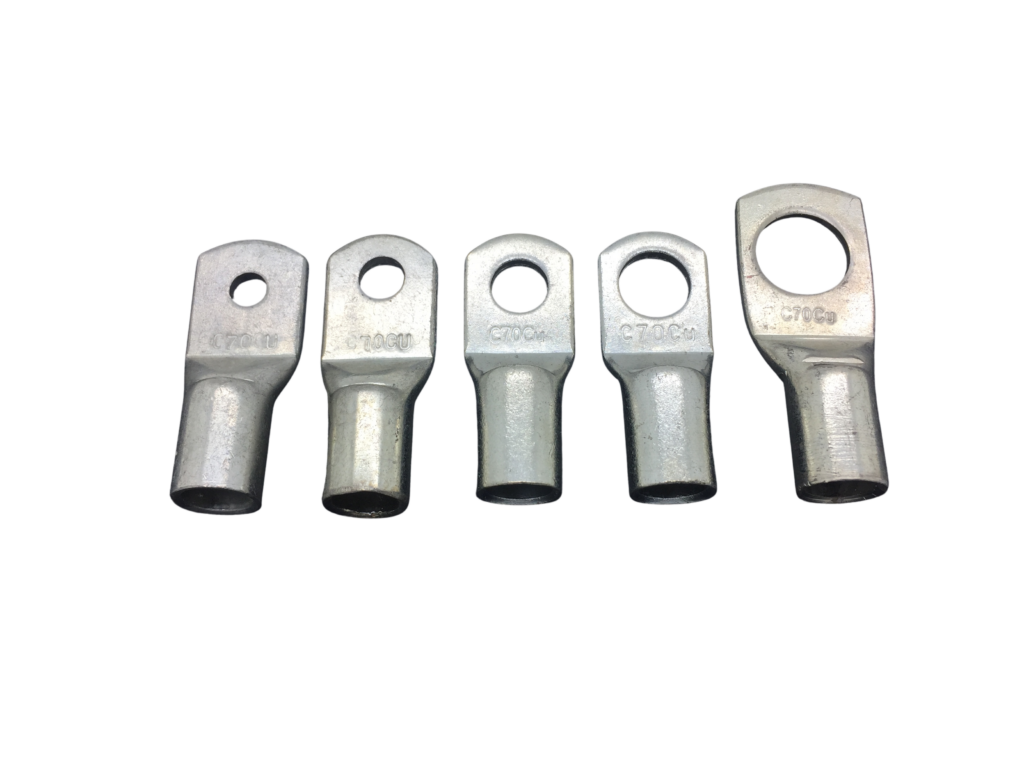
Another important consideration is surface protection.
Tin-plating is often associated with appearance, but its true purpose is functional rather than cosmetic. A properly applied tin coating helps protect the connector against oxidation and corrosion while maintaining stable electrical contact over time.
This becomes particularly important in tropical environments such as Malaysia, where high humidity, industrial pollution and coastal conditions can accelerate corrosion.
For bi-metal connectors, effective surface protection is even more critical because two different metals are present within the same connection system.
Permanent Product Marking
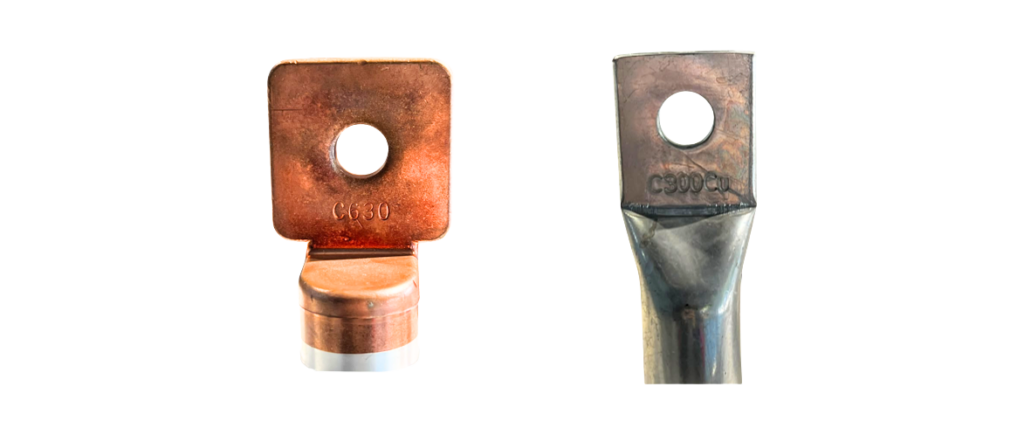
Traceability is another area where standards contribute significant value.
MS 1540 requires permanent markings that identify conductor size, material type and manufacturer information. These markings enable installers, inspectors and asset owners to verify product suitability and facilitate future maintenance activities.
In an era where quality assurance and compliance requirements are becoming increasingly stringent,
traceability has become an essential element of responsible engineering practice.
Of course, even the highest-quality cable lug cannot compensate for poor workmanship.
Many termination failures occur not because of the connector itself, but because of improper cable preparation, incorrect crimping procedures, unsuitable dies or insufficient tightening torque.
At the same time, excellent workmanship cannot fully overcome the limitations of a poorly designed connector. Reliable cable terminations are achieved only when quality products and proper installation practices work together.
Perhaps this is the most important lesson behind standards such as MS 1540:2015, MS 2584:2014 and
IEC 61238-1.
They are not merely technical documents filled with dimensions, material specifications and test
requirements. Rather, they represent decades of collective industry experience and knowledge.
They reflect lessons learned from successful installations, equipment failures, laboratory testing and field performance across countless electrical systems around the world.
As electrical networks continue to evolve and demand higher levels of reliability, the importance of cable
terminations will only increase.
Whether the application uses a lug in a switchboard or a lug in a network, cable termination quality matters.
Thus, long-term reliability begins with a dependable electrical connection.
Therefore, in all cases, a proper cable termination supports performance.
When selecting a cable lug, the most important question should therefore extend beyond cost alone.
A more meaningful consideration is whether the product has been designed, manufactured and tested in accordance with recognized standards.
Compliance with MS 1540:2015 for copper lugs and MS 2584:2014 for bi-metal connectors ensures adherence to Malaysian requirements for quality, design and traceability.
Testing to IEC 61238-1 further verifies their ability to withstand long-term electrical and mechanical stresses.
In many cases, the difference between decades of trouble-free service and a costly future failure may come down to a component that occupies only a few centimeters of space, yet carries the responsibility of transmitting thousands of amperes safely throughout its operational life
Standards are sometimes viewed as procurement requirements or documentation obligations.
In reality, standards represent accumulated industry experience developed through years of laboratory testing, field performance and failure analysis.
Compliance therefore provides more than a certificate; it provides confidence that a product has been evaluated against recognized benchmarks for safety, reliability and performance.
Click here to read the full article on page 53-55.